
As organizations embrace digital transformation and the convergence of IT/OT environments, cybersecurity resilience is key.
One of the looming threats you are likely hearing a lot about is quantum computing – which is quickly approaching what experts refer to as “Q-day”, a theoretical day where a quantum computer will be able to crack public key cryptography, securing access to all our current systems.
When is Q-day?
Predicting Q-day is challenging, as innovations and investments in quantum computing may accelerate predicted timelines without notice. According to some, Q-day can be as early as 2027, or it could also take 20 years. The time to prepare is now.
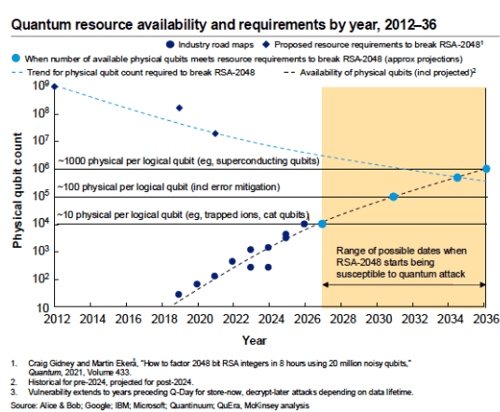
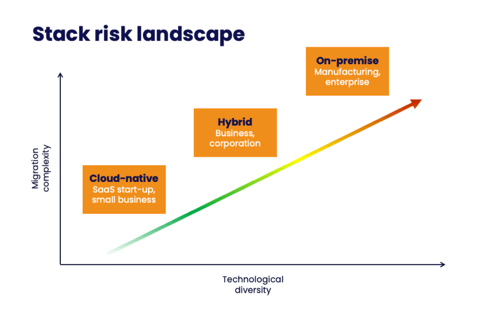
Companies with long-term critical data are advised, and even encouraged to act now, as planning, prioritization and migration will take time and resources. This is even more crucial for operational technology (OT) companies in the critical infrastructure sector – known to have legacy systems with long lifecycles, sometimes even spanning decades.
Starting the migration to PQC now ensures that long-term critical data can be secured, even when Q-day arrives in a few years from now.
Why should you care about the quantum threat now?
Reliance on public key cryptography. Many systems today still rely on public-key cryptography such asRSA/ECDH/ECDSA to secure their systems and data. For example, RSA/ECC is still commonly used in these scenarios:
- Authentication of devices and users (via certificates)
- Key exchange during session setup (e.g., RSA, ECDHE)
- Digital signatures in certificates and firmware validation
When a Cryptographically Relevant Quantum Computer (CRQC) becomes available, it will have the capabilities to break all current encryption methods.
NIST has released 3 finalized quantum-resistant encryption standards and has urged organizations to start preparing their systems now, considering the long timeline it typically takes to deploy apublic key cryptography infrastructure.
Harvest now, decrypt later attacks
Consider any secrets that would be valuable in 5,10, 20 years. Have you secured these secrets today? Adversaries are now deploying the ‘Harvest now, decrypt later’ attacks by harvesting valuable encrypted data now and holding on to it until a quantum computer becomes commercially available. NIST has highlighted this as one of the main reasons organizations need to start deploying post-quantum security as soon as possible.
How can you start your PQC transition?
You can gain visibility into your cryptographic risk to prevent attacks and build compliance readiness. PrivX Insights provides clear visibility into your cryptographic assets, unmanaged keys, and associated risk levels - efficiently and without disruption.
PrivX Insights, with its with its agent-less key discovery, helps you create a full inventory of user keys, host keys, and SSH server algorithms. It enables proactive risk assessment, identifies threats like PAM bypass, and lays the groundwork for your quantum-safe migration.
Leveraging this tool, you can streamline your risk assessment and prioritization that might otherwise take months of manual effort. It aligns with global regulations, such as NIST, to support compliance and creates audit-ready documentation to drive larger key management and remediation programs—securely and efficiently.